Leesburg Area Guide to Professional Gutter Cleaning and Repair Versus DIY
@exteriornotes775
October 18, 2026 · 13 min read
In the Leesburg area, gutter work tends to get ignored right up until the first ugly overflow. Then a summer storm rolls through, water sheets off the roof edge, mulch washes into the walkway, and the homeowner starts wondering whether this was a simple cleaning job or a repair that should have been handled months ago.
That pattern is common across Central and North Florida. Heavy rain, long humid stretches, and the regular buildup of leaf litter and roof debris make gutters less of a cosmetic feature and more of a drainage system that quietly protects the house and yard. When that system stops doing its job, the effects show up fast. You may see water pooling near the foundation, damp areas that attract pests, soil erosion under drip lines, and messy runoff that cuts through lawn or planting beds.
The core question for most homeowners is simple: should you handle the work yourself, or is it smarter to bring in a professional? The answer depends on what kind of problem you actually have, how safely you can access the roofline, and whether the real issue is debris, drainage layout, or damage that needs repair.
Why gutter problems feel bigger in Florida
Florida rain exposes every weak spot in a drainage setup. A gutter that seems fine during a dry week can fail dramatically in a single thunderstorm. That is one reason so many homeowners end up searching phrases like gutter cleaning Dunnellon FL or gutter repair Hawthorne FL after the problem becomes obvious. The need is not unique to those towns. It is the same basic reality across a large stretch of the state.
Runoff management matters here for practical reasons. Water should be directed away from the house and into areas that can absorb it, such as turf, planting beds, rain gardens, or other pervious spaces. If downspouts dump too close to the house, runoff can pool near the foundation and create conditions that invite pest activity. If discharge points are poorly placed, they can also scour out landscape beds or leave a muddy strip along the house after every storm.
That is why professional gutter work is not only about what happens in the trough itself. It is also about what happens at the downspout exit. A lot of DIY jobs stop at “the gutter is clean now,” while the real performance issue sits at ground level, where water should be sent somewhere useful and absorbent rather than allowed to collect or race across hard surfaces.
The first decision: cleaning, repair, or redesign
Homeowners often lump all gutter problems together, but they usually fall into three different categories.
A cleaning issue means debris is blocking normal flow. Water may spill over the edge because leaves and muck are creating dams inside the gutter or at the downspout opening. This is the most common problem, and in mild cases it can be a reasonable DIY task for someone who is comfortable on a ladder and working carefully.
A repair issue means something is damaged or no longer aligned. Seams can leak, a section can sag, a downspout can loosen, or water can escape because the system no longer holds or directs flow properly. This is where a lot of homeowners underestimate the job. You can clear a gutter and still have a system that fails in the next storm because the structure itself needs attention.
Then there is redesign. That comes up when the gutter may be intact and clean, but the drainage pattern around the home is still poor. Water may be directed to the wrong side yard, a walkway, a foundation corner, or the edge of a lanai or enclosure. In Florida, that drainage decision matters. Keeping roof runoff on site in areas that can absorb water is part of sensible yard and stormwater management. If the whole layout is wrong, cleaning alone will not solve the headache.
When DIY makes sense
There are homeowners who can handle routine maintenance well. If the home is one story, the access is straightforward, the weather is dry, and the problem is clearly just leaf litter or loose debris, DIY can be practical. The phrase DIY gutter cleaning or hire a pro is really a judgment call about risk, not only cost.
If you know your footing is stable, the ladder is correctly placed, and you are only removing visible buildup and checking for obvious flow issues, that can be a manageable weekend task. It also gives you a chance to notice early warning signs before they become expensive annoyances. A slight overflow mark under one section, for example, may point to a developing clog. A damp area below a downspout may suggest the water needs to be redirected farther into lawn or planted space.
Still, DIY only works when the homeowner is honest about limits. Once rooflines get high, slopes get awkward, or the gutter run sits above a screen enclosure, pool area, or other obstacle, the risk rises quickly. Saving a service call is not much of a win if the work is rushed, incomplete, or unsafe.
The point where professional service earns its keep
Professional gutter cleaning and repair is not just about having better ladders. It is about experience. A good technician can usually tell the difference between a maintenance issue and a system problem within a few minutes. That matters because many overflows have more than one cause.
Take a typical Florida scenario. A homeowner notices spillover during summer rain and assumes the gutter is packed with leaves. The crew arrives, clears moderate debris, and then sees the downspout discharge is aimed at a spot that already stays wet. The original overflow may have been made worse because the water had nowhere useful to go at the end of the line. That is not unusual. Roof drainage, foundation protection, and landscape protection are tied together.
Professionals also help when the condition of the gutter is being misread. Homeowners sometimes think a dark streak or drip at a seam means the whole system needs replacement. Sometimes it does not. Other times they assume a little leak can wait, when in reality repeated runoff near the house is already starting to erode soil or create standing water issues.
The value of professional work becomes even clearer when repairs are involved. Refastening loose sections, correcting pitch, dealing with troublesome seams, or adjusting downspouts so water ends up in a better receiving area takes more judgment than many DIY videos suggest.
The hidden issue most people miss: where the downspout sends water
A clean gutter is only half the system. The downspout exit is where the real drainage outcome happens, and this is one of the most overlooked parts of Florida gutter work.
In this climate, it makes sense to direct roof runoff into areas that can absorb it. Lawns, planting beds, rain gardens, and other pervious areas can help slow and soak in water, reducing runoff and erosion. That approach also helps avoid pooling near the foundation, which is exactly what you do not want. If water repeatedly gathers at the base of the house, you are not dealing with a minor cosmetic nuisance. You are creating wet conditions where they should not be.
This becomes especially important for gutter drainage for pool cages and outdoor living spaces. A lot of Florida homes are designed around patios, screened enclosures, and poolside traffic patterns. If a downspout empties into a spot that splashes back toward the deck, cuts a channel alongside the enclosure, or creates a muddy edge by the walkway, the problem is bigger than the gutter itself. It is a drainage planning problem.
That is one reason some homeowners are surprised after a professional visit. They expected a cleaning, but the most useful fix turned out to be changing where the water went after it left the downspout.
Repair versus replacement, and where cost questions come from
Once a gutter system starts leaking or pulling away, many homeowners jump straight to the price of replacement. Searches for gutter installation cost factors Florida often start there. But cost is tied to several practical decisions, and not every issue calls for a full new system.
The first question is whether the existing gutters are fundamentally serviceable. If the trouble is localized, a repair may be enough. If multiple sections are failing, if the layout never find out more handled runoff well, or if maintenance has been neglected long enough to create recurring problems, replacement may start to make more sense.
In Florida, installation cost is influenced by the size and complexity of the home, how easy the roofline is to access, and how much downspout work is needed to direct runoff properly. The drainage plan around the property matters too. If a crew has to rethink where water should discharge so that it moves into turf or planting areas instead of creating runoff and erosion problems, that adds planning and labor even when the gutter itself is straightforward.
Homeowners also look at product type and local availability. Some may search for seamless gutters Williston FL or similar service terms because seamless options are commonly discussed when people want fewer joints and a cleaner look. The important point is not the town name in the search phrase. It is understanding that installation choices affect both maintenance needs and long-term performance.
A few Florida myths that cause expensive mistakes
There are some persistent gutter myths Florida homeowners run into, and they tend to lead people in the wrong direction.
One myth is that if water spills over the edge, the gutter must be undersized. Sometimes that is true, but often the issue is blockage, poor pitch, or a bad discharge location. Jumping to replacement before checking maintenance and drainage can waste money.
Another myth is that gutters only protect the roof edge. In reality, they are just as much about protecting the ground below. They help control where roof runoff lands, which affects erosion, plant beds, walkways, and whether water pools near the foundation.
A third myth is that gutter guards mean you never have to inspect the system again. Guards may reduce debris entry, but they do not eliminate maintenance. Florida conditions still bring organic buildup, and any roof drainage system benefits from regular checking. That is why interest in products such as gutter guards Mount Dora FL should be paired with realistic expectations. A guard can be part of a maintenance strategy, not a substitute for one.
Homes with metal roofs need a little extra thought
The phrase gutters for metal roofs Florida comes up often because metal roofing changes how water behaves. Even without diving into brand-specific claims or product details, it is fair to say that roof material affects drainage performance. Water can move differently across roof surfaces, and that means the gutter setup, attachment method, and discharge planning deserve attention during installation or repair.
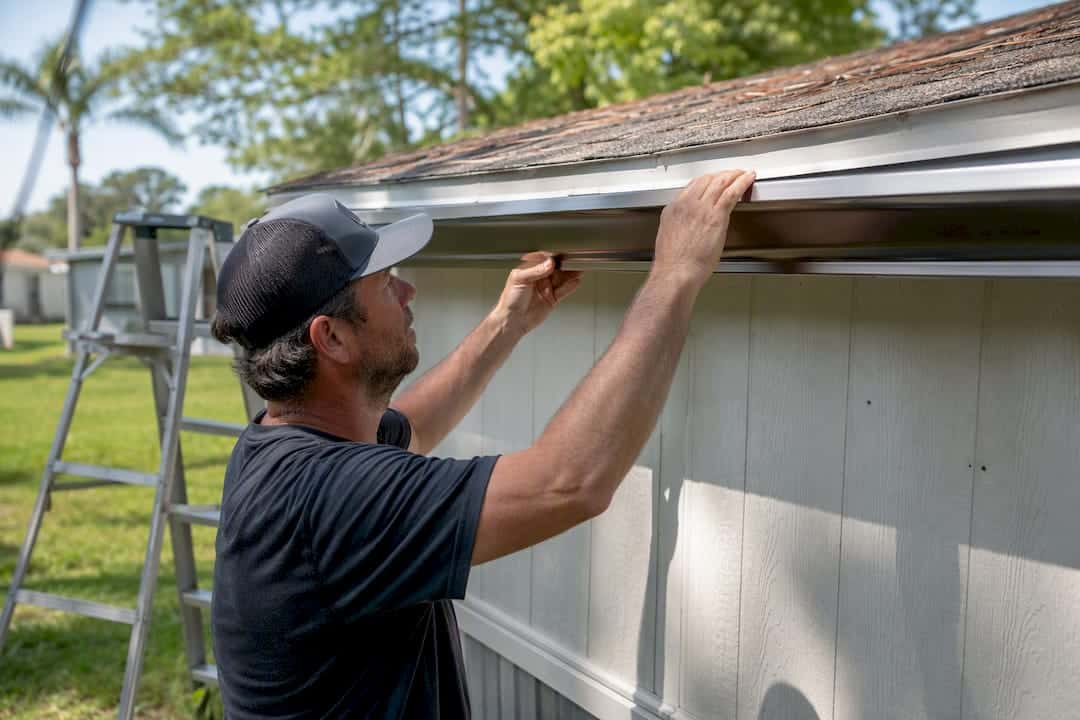
This is another place where DIY can fall short. A homeowner may focus on visible debris while missing how the roof and gutter work together as a drainage system. On homes where runoff moves quickly in heavy rain, small alignment problems can become noticeable overflow issues in a hurry. If you have a metal roof and recurring water management trouble, that is a good time to get an experienced set of eyes on the system rather than guessing.
The visual side matters too, especially in neighborhoods with review standards
Not every gutter decision is about water. Some are about appearance. People do care about gutter colors for Florida homes, especially when gutters are highly visible from the street or run along a light exterior. A wrong color can stand out more than most homeowners expect.
In neighborhoods with HOA or architectural review requirements, exterior appearance may be regulated. Associations can have standards for style and color, though those standards must still comply with applicable code requirements. In everyday terms, that means a homeowner should check design expectations before ordering a new gutter system based purely on personal preference.
This comes up more often during replacement than repair. If a section is being swapped or a full system is being installed, confirming acceptable colors and profiles beforehand can prevent delays and frustration. It is a small step, but one that saves a lot of backtracking.
How to decide whether to hire help this season
If a homeowner asks me whether they should handle the gutters themselves this month or schedule a professional, I would boil it down to five practical questions:
- Is the home easy to access safely from a ladder?
- Do you believe the issue is only debris, with no sagging, leaking, or drainage misdirection?
- Are downspouts already sending water well away from the house into areas that can absorb it?
- Is there any overflow near a pool cage, screened area, walkway, or foundation corner?
- Will you actually inspect the entire system carefully, not just scoop out the obvious mess?
If the honest answer to any of those leans no, professional service starts looking a lot more sensible.
What a smart maintenance routine looks like in Florida
Routine care beats emergency fixes. That is true almost everywhere, but it feels especially true in Florida because storms reveal neglect so quickly. A year-round gutter checklist Florida homeowners can live with does not need to be fancy. It just needs to be consistent.
The best rhythm is seasonal observation with a little extra attention before and during the wetter parts of the year. Look at how the gutters perform during actual rain, not only when the sky is clear. Overflow tells you things that a dry inspection cannot. Watch where the downspouts release water. Notice whether lawn, beds, or side yards are absorbing it well, or whether it is running off, pooling, or washing out mulch.
A practical maintenance routine usually includes these checkpoints:
- clear visible debris before heavy rain periods
- watch for water pooling near the house after storms
- check that downspouts discharge into pervious areas, not problem spots
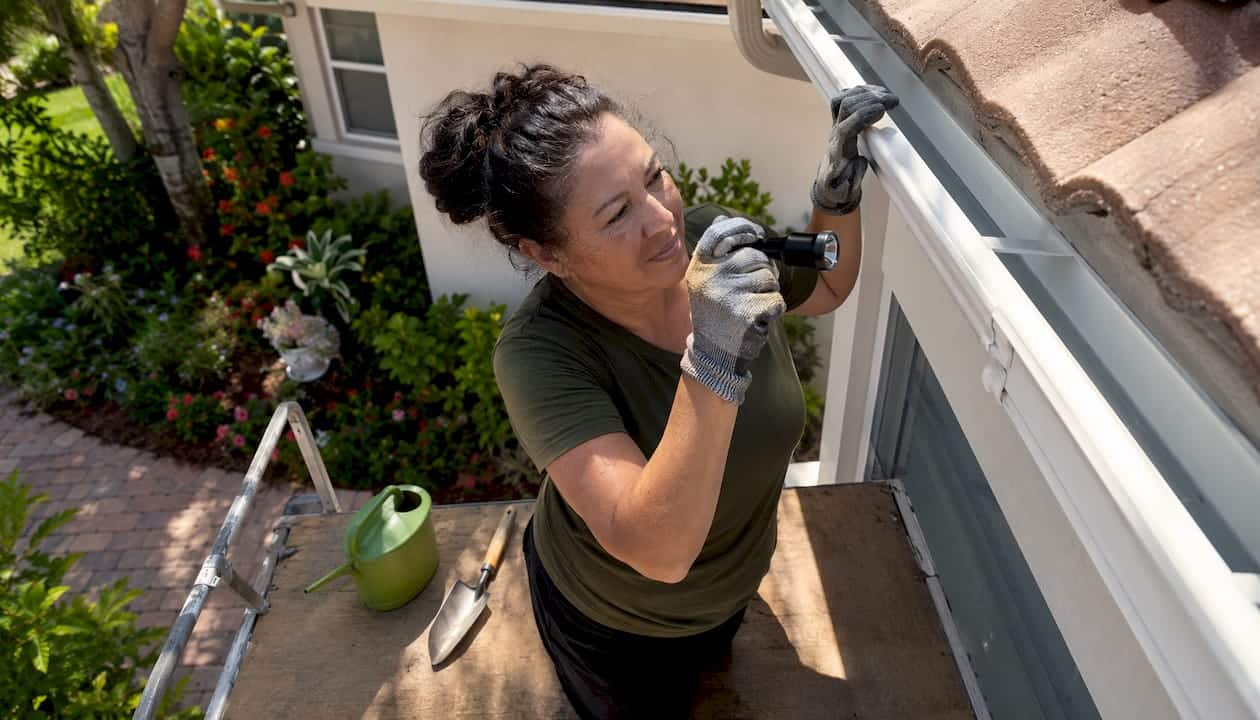
- inspect for leaks, sagging, or loose sections
- reassess drainage around pool and patio areas after major rain events
That routine sounds simple because it is. The challenge is doing it before the overflow stains, muddy splashes, and wet foundation edges appear.
What homeowners in the Leesburg area should keep in mind
The local lesson is not complicated. In a region shaped by summer downpours, humidity, and fast-moving roof runoff, gutters are not a once-and-done purchase. They are part of the home’s drainage system and need occasional attention, whether that means cleaning, repair, or a better plan for where the water goes.
DIY can be the right move for a basic, low-risk cleaning job on an accessible home. Professional service becomes the smarter choice when safety is questionable, when the problem keeps coming back, or when the gutter itself is not the only issue. A good repair visit can solve more than a clog. It can correct a drainage pattern that has been quietly undermining your landscape, outdoor spaces, or foundation edge every time it rains.
If you remember one thing, make it this: the success of a gutter system is measured less by how clean it looks from the driveway and more by what happens during the storm. When rain hits hard, the water should move off the roof, through the gutters, down the spouts, and into places that can handle it. That is the standard worth judging, whether you grab the ladder yourself or call a pro.